

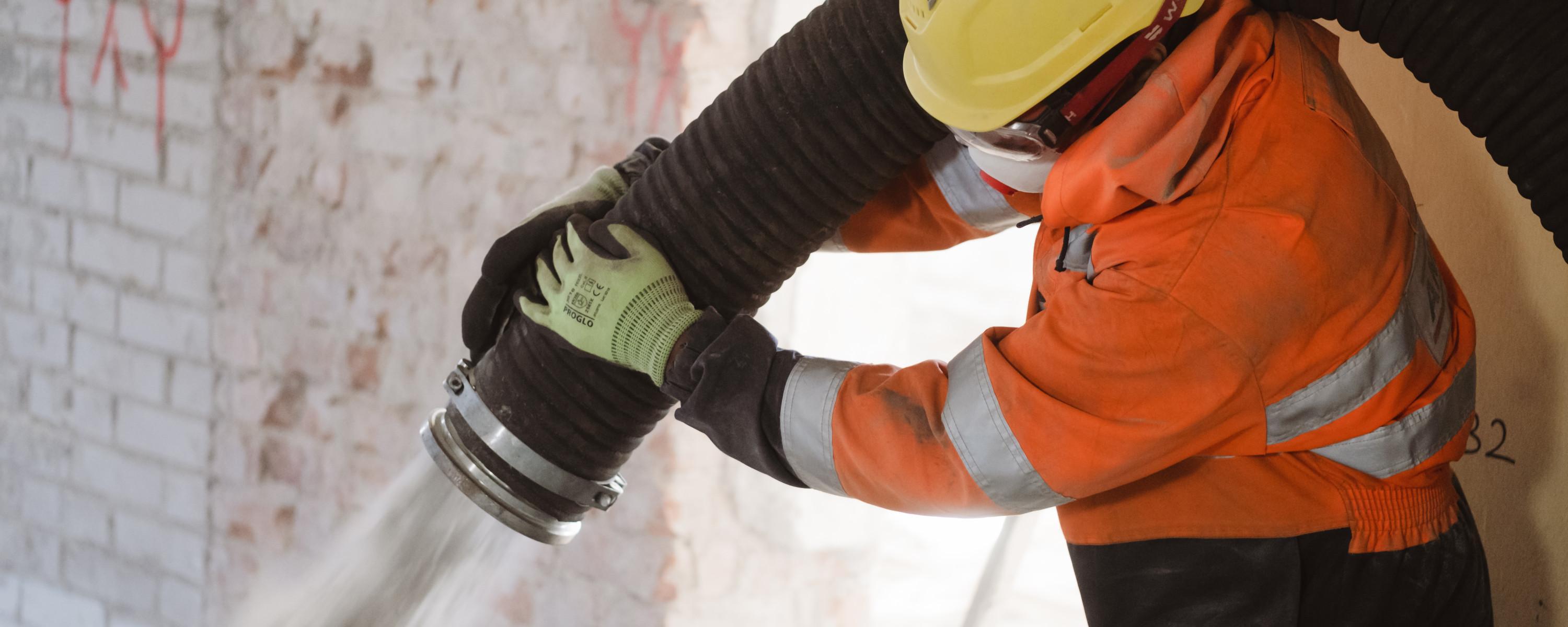
The construction industry is one of the world’s largest consumers of natural resources and producers of emissions. At the same time, it is one of the most significant sectors where the circular economy can genuinely change the bigger picture, not at some point in the future, but right now. Circular economy considerations are, or at least should be, part of everyday decisions on the building site, at the design desk, and in requests for quotation.
Whether you are an infrastructure builder, a house builder, a client, or a designer, the circular economy is relevant to your work. In this article we highlight three things every construction professional should know, and give concrete examples of how they show up in real-world projects.
In brief
- The circular economy is a team sport – no single player makes it happen alone.
- Recycled materials are already technically competitive – often even better than virgin ones.
- Every material choice is a climate and soil action – it matters far more than many people realise.
1. The circular economy is a team sport – no one does it alone
The circular economy is often framed as a technical challenge: how to collect, sort, and reuse materials as efficiently as possible. In reality, it is just as much about collaboration and strategy. The circular economy only works when companies, industries, and communities work together. No one can operate it alone.
This is an important picture to grasp from a builder’s perspective as well. When you choose a circular economy product for your site, you become part of a value chain in which the recycled material, sorting, manufacturing, logistics, and end use form a single whole. The production of Foamit foam glass, for example, depends on glass material being supplied reliably and continuously by partners. Without this recycling chain there would be no product, and without builders who choose the recycled-content material, there would be no demand to keep the chain running.
A good example of collaboration comes from Norway, where Foamit Group’s subsidiary Glasopor works together with insulation manufacturer Glava and Stena Recycling. Glass wool waste that would otherwise end up in landfill is processed back into circulation as new foam glass products. One process’s waste becomes another’s raw material.
So when you are requesting quotes and comparing materials on behalf of the builder, also ask where the material comes from and what kind of cycle it belongs to. Knowing that a material is part of a functioning cycle is, in itself, a mark of quality.
2. Recycled materials are technically competitive – often even better
One of the most persistent misconceptions about the circular economy is that recycled-content materials are some kind of compromise: acceptable for environmental reasons, but technically inferior. That is not the case, at least not when it comes to foam glass.
Foamit foam glass is made from up to 99 percent recycled glass. It is the lightest structural and insulation material in its class, and its properties suit several uses at once:
- Lightweight fill on soft ground
- Frost insulation – replaces frost insulation boards, and is installed by machine without special equipment
- Capillary break – protects, for example, concrete foundations from ground moisture
- Drainage layer – good water permeability
A practical example from Kaarina, Finland: in the Voivalantie small warehouses project, contractor Rakennuspalvelu J. Martti & Co. chose foam glass specifically for its versatility. A single material delivered lightweight fill, frost insulation, and a capillary break. And because frost insulation boards did not need to be installed by hand, the work moved faster and costs came down. According to calculations by Suomen INFRA Palvelu Oy, Foamit was the most cost-effective of all the alternatives compared.
On the building construction side, the circular economy has recently expanded into new products as well. The Foamit Roof Tile, brought to market in 2026, combines crushed foam glass with low-carbon concrete. Finnish circular economy companies Foamit Oyj, Carbonaide Oy, and Rakennusbetoni ja Elementti Oy developed the roof tile for the ventilated upper roofs of low-pitch residential, commercial, and office buildings. It is a concrete example of how a circular economy product can combine structural performance with a significantly smaller carbon footprint.
Choosing a recycled-content product is therefore not a question of quality, but a question of smart design. Often a single material solves several problems at once, and at the same time makes the project more environmentally sustainable.
- Foamit applications in infrastructure and building construction https://foamit.fi/en/applications/
3. Every material choice is a climate and soil action
Construction consumes vast quantities of virgin earth materials, gravel, sand, crushed stone. The use of these raw materials puts a double load on soil and climate: as healthy soil is destroyed, its carbon-sequestration capacity disappears, and at the same time the transport and processing of heavy materials produce additional emissions. Soil is one of our most important natural resources and a key factor in the climate balance. Protecting it starts with reducing the need for virgin materials.
This is where the builder has a front-row seat. A single material choice may feel small, but large projects show the scale of impact:
- The refurbishment of Sweden’s E6 motorway near Stenungsund used 44,000 cubic metres of foam glass. This kept around 8,800 tonnes of glass out of landfill and reduced carbon dioxide emissions by 2,000–6,000 tonnes.
- The renewal of Espoo’s Tapiola Sports Park, Finland in 2026–2027 will use approximately 16,000 cubic metres of foam glass to lighten road structural layers and in the structures of football pitches.
- The Myllypelto school construction project in Raisio, Finland will receive approximately 10,800 cubic metres of foam glass during spring 2026 for the structural layers of the school yard and traffic routes.
When each of these cubic metres is replaced with recycled-glass-based product instead of virgin earth material, the impact is significant. And when taken into account that foam glass is also lighter to transport than crushed stone, emissions are reduced in logistics as well.
Glass is a particularly interesting material in this picture: it is 100 percent recyclable and retains its properties indefinitely. For this reason, finding new sources of raw material, such as bringing automotive glass more efficiently back into circulation, is one of the industry’s hottest development areas right now.
The origin and carbon footprint of a material should therefore be part of the normal procurement process. The Environmental Product Declaration (EPD) is a useful tool, as it transparently reports a product’s climate impact.
- Transparent emissions data: Foamit EPD
Summary
For a construction professional, the circular economy is a way of thinking about materials, partnerships, and every building site. So keep these three key points in mind from this article:
- Collaboration is the foundation of the circular economy. By choosing a circular economy product, you become part of a functioning value chain.
- Recycled materials work. Foam glass and other circular economy products are often technically competitive, and a single material can solve several problems at once.
- Material choices have a major impact. Carbon footprint and the consumption of virgin earth materials shrink with every cubic metre.
The good news is that shifting to the circular economy does not require a builder to revolutionise their business. It requires knowledge, good partners, and the readiness to ask one extra question when requesting material quotes: what is this made of?
Want to talk about your next project?
Foamit foam glass is suited to a wide range of infrastructure and building construction sites, from lightweight fill to frost insulation and roof tiles. Request a quote or explore applications.
Frequently asked questions
What does the circular economy mean in the construction sector?
In the circular economy, the construction sector aims to use materials as many times as possible instead of building from virgin raw materials and overloading landfills with construction waste. In practice, this means using recycled-content products, reusing materials, processing demolition waste, and designing construction so that materials can later be recovered.
Are recycled materials as durable as virgin ones?
In many cases yes, and in some cases even better. Foam glass, for example, is made from 99% recycled glass, and it is the lightest structural and insulation material in its class. It works simultaneously as lightweight fill, frost insulation, and a capillary break. Technical performance is based on the properties of the material, not on whether the raw material is recycled or virgin.
How can a builder concretely promote the circular economy?
The most important single action relates to material choices. Ask material suppliers about a product’s origin, recycled content, and Environmental Product Declaration (EPD). Favour products whose raw material is recycled and whose carbon footprint is documented. It is also worth considering already at the design stage how structures can be dismantled and materials recovered at the end of the site’s life cycle.
What is foam glass and where is it used in construction?
Foam glass is a lightweight, insulating construction material made from recycled glass. In infrastructure construction it is used in lightweight fill structures, frost insulation, capillary breaks, and drainage layers. In building construction it is used, among other things, in upper-roof insulation and in new products such as the Foamit Roof Tile.
What is an EPD and why is it important?
An EPD, or Environmental Product Declaration, is a standardised, third-party verified document that transparently reports a product’s environmental impacts, especially its carbon footprint. It is an important tool for builders because it allows the actual climate impacts of different products to be compared. An increasing number of projects require EPD information in their requests for quotation.
 Contact us